
Discover how event inventory management software helps venue owners avoid costly conflicts, protect their equipment investment, and deliver the client experience that drives referrals and repeat business.
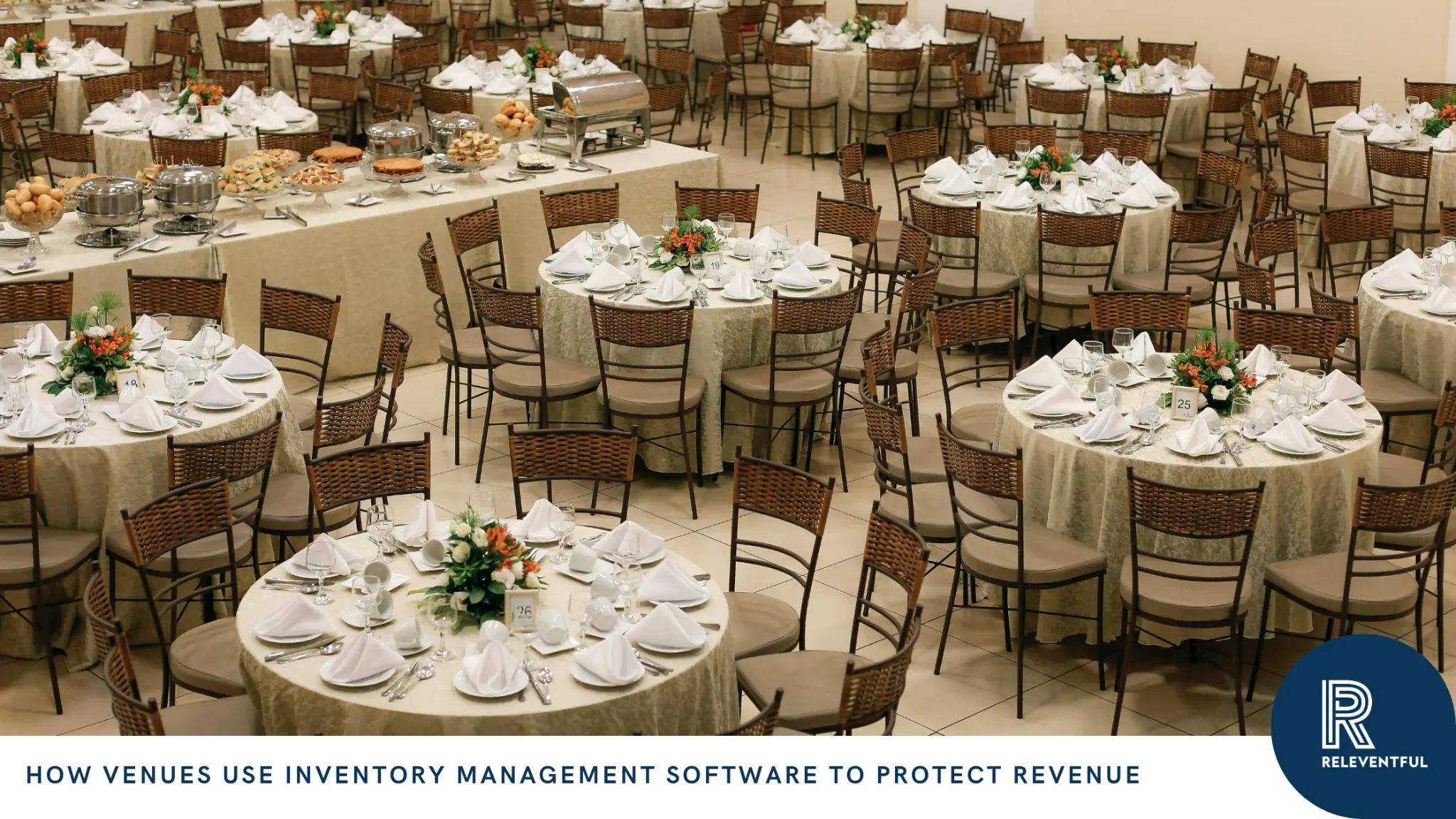
The tour had gone well. The couple had walked every inch of the space, asked good questions, and by the time they reached the main ballroom they had already started imagining the night in their heads.
Then they noticed the chairs.
They were a distinctive style the venue had invested in specifically because they photographed beautifully and clients consistently responded to them. The couple asked if those chairs would be available for their date. The venue manager said yes without hesitation, because as far as she knew, they would be.
Three months later, during a final planning call, someone on the team pulled up the event and realized those chairs had already been committed to a corporate event happening the same weekend. The couple had built their entire vision around them. The conversation that followed was uncomfortable, trust took a hit, and the experience heading into their wedding day carried a shadow it didn't need to.
Until this point, the venue owner had not considered an inventory management system. The chairs were the first time the gap between what she thought she knew and what she could actually confirm had cost her.
Venue owners tend to think about inventory management as a logistics problem. Keep track of what you own, know where it is, make sure it shows up on event day. That's the baseline. But the real cost of poor inventory visibility is quite expensive.
In the wedding and events industry, word of mouth carries more weight than almost any marketing channel. A couple who felt genuinely cared for throughout their planning process tells people. A couple who encountered friction, surprises, or broken promises also tells people.
The challenge is that inventory-related problems often surface close to the event, when emotions are running high and there's no easy fix. By that point, the damage to the client relationship isn't about the chairs or the linens. It's about whether the venue can be trusted to follow through on what was promised.
Protecting that trust starts well before event day. It starts in the moment a commitment is made, and whether the person making it actually knows what's available to give.
Specialty chairs, custom linens, décor pieces, AV equipment, and other inventory items represent significant capital. Most venue owners have a rough sense of what they own, but without a system tracking where every item is allocated across upcoming events, that inventory can become harder to account for.
Items get moved, borrowed across events, stored in the wrong place, or simply lost in the shuffle of a busy season. Over time, that drift will add up. The venue ends up spending money replacing things that should still be in rotation, or renting items they already own because nobody can confirm where the originals are.
A clear inventory record not only helps you run events. It protects the investment you've already made.
Solid inventory management software can be a game changer to your day-to-day venue operations.
When inventory is connected to your event bookings rather than tracked separately, your team can see exactly what's been allocated for any given date before making a commitment to a new client. There's no second spreadsheet to cross-reference, and no checking with a coworker who might remember what got assigned last week.
Releventful applies your inventory directly as you're building a client invoice, so what's promised is always reflected in what's reserved. When something is allocated to a booking, it's accounted for. When it isn't, you know it's available.
One of the less obvious benefits of inventory management software is what it lets you do during the sales process. When a prospective client asks about a specific piece of inventory for a date six months out, the answer shouldn't depend on who happens to be in the room or how good anyone's memory is.
Releventful's inventory reporting shows you what's available not just today, but one week, two weeks, or a month from now. This visibility means your team can answer confidently during tours and proposal conversations, which keeps momentum moving and reduces the back-and-forth that slows down bookings.
Even with strong tracking, conflicts happen. A popular linen color is requested across two events on the same weekend. A signature chair style is already allocated when a new inquiry comes in asking for it.
Releventful's inventory suggest technology uses a proprietary tagging system to automatically recommend replacement inventory when a specific item isn't available for an event. Rather than stopping the conversation with a no, your team can respond quickly with an alternative that works, keeping the client experience smooth and the sale moving forward.
Knowing what you own is only part of the picture. Knowing where you bought it, what it cost, and where to get more when something needs to be replaced is what makes inventory management genuinely useful over time.
Releventful's smart fields store the model number, serial number, purchase price, depreciated value, and a direct link to the original purchase source on each inventory item. When something breaks, wears out, or needs to be reordered, the information is already there. You’ll save time by not going through old receipts or trying to remember which vendor supplied a particular piece three seasons ago.
Inventory information is only valuable if it reaches the people who need it. Releventful automatically gives scheduled employees access to the event detail report for their event, which includes the full inventory list for that booking.
That means setup teams know exactly what's been allocated, without anyone having to manually communicate it. The right information reaches the right people as a built-in part of the workflow.
The connection between inventory management and revenue isn't always direct.
A venue that can confidently answer inventory questions during a tour closes more bookings in the moment, without the friction of following up later. A venue that delivers on exactly what was promised generates the kind of client experience that turns into reviews, referrals, and repeat business from the planners and vendors who were part of the event.
On the other side of that equation, a venue that over-commits inventory, discovers conflicts late, or loses track of equipment is spending money it doesn't need to spend and creating problems that quickly erode the reputation it's worked to build.
The venues that protect and grow revenue consistently aren't necessarily the ones doing the most marketing. They're often the ones running the tightest operations behind the scenes.
If your current approach to inventory is a spreadsheet, a shared document, or a system that lives primarily in someone's head, the transition to software-based tracking is more straightforward than it might seem. Unlike a standalone inventory tool, Releventful's inventory management is built into the same platform handling your bookings, proposals, contracts, and payments. That means your inventory isn't just tracked in isolation. It's connected to the rest of your operation from the moment a client inquires to the day of the event.
Releventful lets you upload your existing inventory directly from an .xls or .xlsx file, so you're not rebuilding records from scratch. The platform is designed to get venue teams operational quickly, with a structured onboarding process and dedicated support along the way.
If you want to see how the inventory tools work inside the context of your specific event types and booking volume, a live demo is the clearest way to do that.
Book a free demo at releventful.com/demo.

Transform your event management journey from concept to analysis with Releventful. Elevate each step with our comprehensive tools designed for unforgettable event experiences.
Explore our features now!
Simplifying the way event businesses run.


