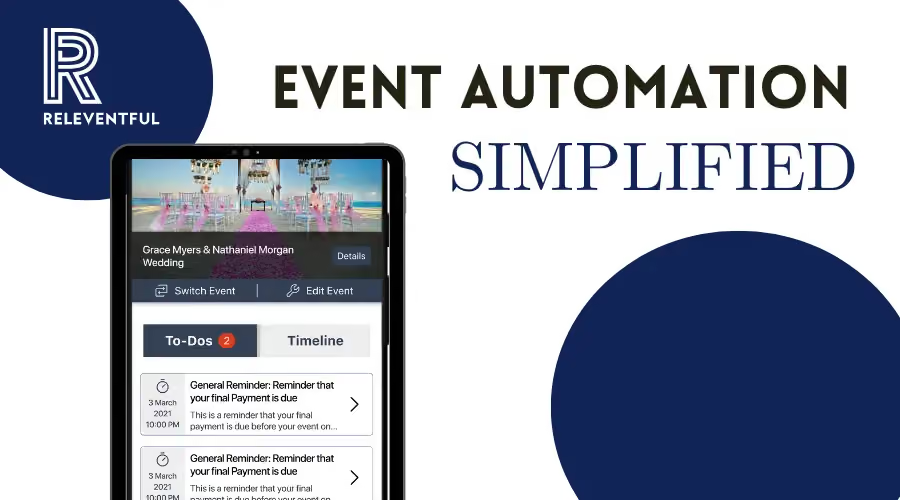
Venue owners juggle sales, operations, and admin. See how event-specific automation and Workflow Studio help give your team time back.
Nobody opens a venue because they want to spend their evenings chasing signatures. They open a venue because they love the room full of people, the moment a couple sees the space for the first time, or the buzz of a corporate holiday party pulling off without a hitch. Somewhere between that vision and the day-to-day, most venue owners end up doing three or four jobs at once: sales, operations, admin, and whatever falls through the cracks of the other three.
An extra person may help, but adding staff alone does not fix a process that lives in one person's memory. Take time to look at your workflows, processes, and the software supporting them.
If you asked most venue owners to list their responsibilities, the list would start as expected: give tours, manage bookings, oversee events. Ask them what they really did last Tuesday, and the list gets longer and messier. They answered the same pricing question for the fourth time that week (and it was only Tuesday). They chased a signature on a contract that's been sitting for ten days. They ended the evening at 9pm, realizing in the shower that a lead from the tour last week never got a follow-up.
None of these tasks are hard on their own. Stacked together, across every proposal sent, every contract chased, and every follow-up held together by memory, they add up to a second job layered on top of the first one. It's also the job the owner may not have realized they were signing up for.
The cost isn't just personal burnout, though that's real too. It creeps up in the business in ways that are easy to miss because they don't look like a single dramatic failure. Think of a lead that gets a slower reply than the venue down the street. Or the time a proposal that went out with the wrong pricing because someone was working from an old template. Then there was that moment when a returning client had to re-explain preferences from their last event because none of it got saved anywhere the team could find.
Each of these, on its own, looks like a small miss. Across a full season of weddings, corporate events, and all the other fun, the small misses compound into lost bookings the owner never fully sees, because there's no line item on a P&L for "the follow-up that didn't happen."
There's a cost here that never shows up on a spreadsheet. The parts of the job that made someone want to run a venue in the first place, the walkthroughs, the design conversations, the relationships, get crowded out by admin work. Admin isn't any less important just because it's less interesting. It just needs the right software behind it instead of one person holding all of it together.
Part of why this gets so unmanageable is that most venues try to run every event through the same mental checklist, regardless of what kind of event it actually is. A wedding inquiry and a corporate inquiry need different follow-up cadences, contracts and proposals, but without a system built to tell them apart, they often get treated identically.
A wedding client might need a warmer, more personal touch across a longer sales cycle. A corporate booker, often working with a tighter timeline and a boss who wasn't on the tour, needs something closer to a clean, forwardable answer. Not to mention, they may even have a legal department reviewing the contract. Trying to run both through one generic process means one of them, usually the one that doesn't match the owner's instinct, gets shortchanged.
Working harder is not a sustainable plan, and most venue owners already care plenty. Alongside the right staffing, the business needs a repeatable process that does not depend on someone remembering every step.
Releventful's automation templates let you create different processes for weddings, corporate functions, milestone celebrations, and the other events your venue hosts. Each can have its own follow-up cadence, proposal structure, and contract language. Start with the processes you need now, then expand as your business grows. Reuse the templates and review them when your packages or policies change.
Configured workflows can handle scheduled email and SMS follow-ups and help your team use the right templates for each event type. Keep templates current, preview the proposal before sending, and review the conditions that control when messages run or stop. Updating a template should not be assumed to change an offer you already sent.
Workflow Studio makes that process easier to build and maintain. Describe how you work, speak it aloud, or bring an existing workflow document. Use AI assistance to create a draft, then review the steps, test the behavior, and publish when it is ready. As your process changes, return to the same workspace to improve it.
None of this replaces the walkthroughs, creative decisions, and relationships that made you want to run a venue. It reduces the repeated setup and manual reminders that get in their way.
The real return here isn't measured only in hours saved, though there are plenty of those. It's measured in what an owner gets to do with the time that used to go to retyping the same details and holding an entire calendar in their head.
That's time that goes back into the walkthroughs and the client relationships. It's time that goes back into the creative parts of running a venue that only a human can do. The job nobody applied for doesn't go away. It just doesn't have to run on memory anymore.
Curious what automation templates could look like for your specific event types? Book a demo and we'll walk through it.

Transform your event management journey from concept to analysis with Releventful. Elevate each step with our comprehensive tools designed for unforgettable event experiences.
Explore our features now!

The AI-powered venue management platform — from first inquiry to final follow-up.
Feature Highlight
Quick Close InvoicingClient / Vendor PortalBusiness AutomationSMS Texting Add-OnSee all features